

So, We’re talking about the payroll that keeps your employees happy, your business running, and HMRC off your back. But what does “payroll” actually mean? Is it just about handing out paychecks, or is there more to it?
Well, all your questions will be answered right away without any delay because in this article, we’re going to break down the meaning of payroll, why it matters, and how it works without putting you to sleep.
So grab a cup of coffee, and let’s dive in.
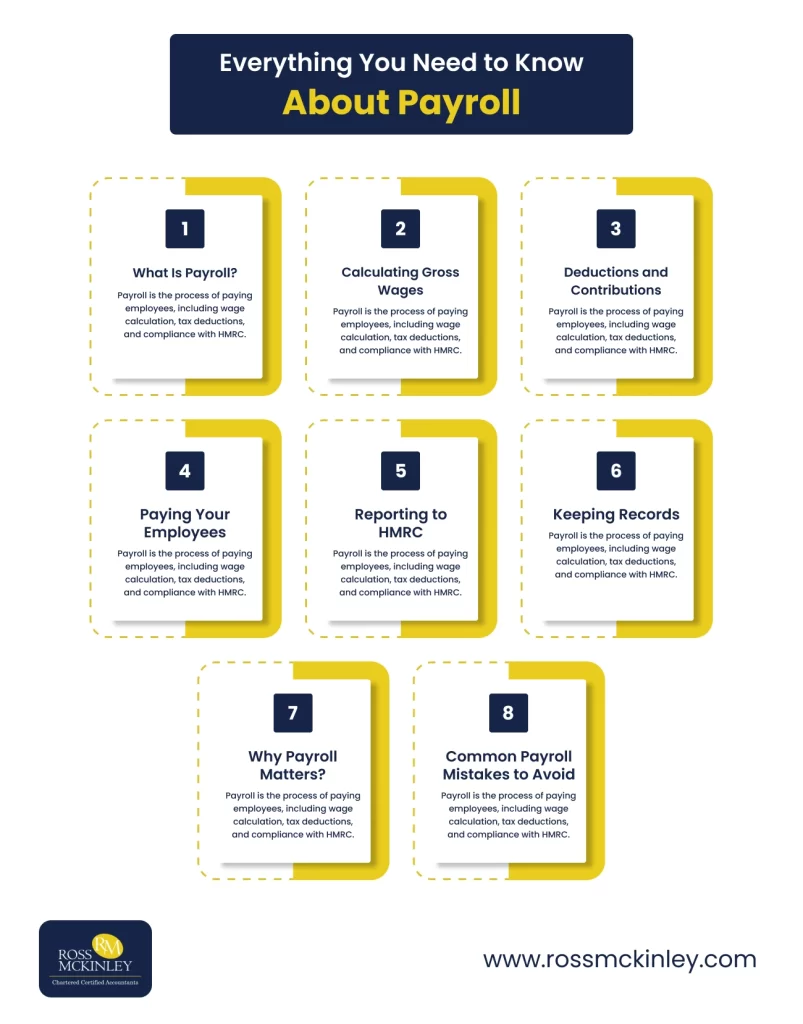
Table of Contents
What Does Payroll Mean?
Payroll is the process of paying a company’s employees, ensuring they receive their hard-earned money accurately and on time. But, it’s so much more than just handing out paychecks.
Payroll involves tracking hours worked, calculating gross wages, deducting taxes and contributions, and distributing payments via direct deposit or checks. It also includes accounting functions to record everything from bonuses and overtime pay to sick leave and vacation pay.
Beyond employee payments, payroll ensures compliance with tax laws by withholding and reporting amounts for Medicare, Social Security, and unemployment taxes. Payroll isn’t just a task, It’s a critical function that keeps businesses running smoothly.
How is Payroll Calculated?
At its core, payroll is the process of paying your employees. But if you think it’s just about writing checks or hitting “send” on a direct deposit, think again.
Payroll is a multi-step process that involves calculating wages, deducting taxes, and making sure everyone gets paid on time. Here’s how your payroll is calculated:
- Calculating gross wages
This is the total amount your employees earn before any deductions. Think of it as the “before” picture, and the net pay is the “After” Picture.
- Deductions and contributions
This is where things get complicated. You’ll need to deduct income tax, National Insurance, pension contributions, and maybe even student loan repayments.
- Paying your employees
Once all the deductions are made, it’s time to pay your employees. This can be done via direct deposit or cheque.
- Reporting to HMRC
You’ll need to submit Real Time Information (RTI) to HMRC, which is your formal way of saying, “Hey, we paid our employees, and here’s how much tax we took out.”
- Keeping records
Keeping records is a must because if HMRC comes knocking, you’ll want to have all your ducks in a row.
Why Does Payroll Matter?
Now that we’ve covered what payroll is, let’s talk about why it matters. Because, let’s be real, if it didn’t matter, we wouldn’t be talking about it.
- It Keeps Your Employees Happy
Let’s start with the primary reason: your employees want to get paid. And they want to get paid on time. If you mess up payroll, you’re going to have some very unhappy employees on your hands. Unhappy employees tend to be less productive and more likely to leave.
- It Keeps HMRC Happy
If you mess up your payroll taxes or fail to submit your RTI on time, you could be facing fines, penalties, and a whole lot of stress. And trust me, HMRC doesn’t care if you were “too busy” to file on time.
- It Helps You Stay Compliant
Payroll isn’t just about paying your employees; it’s also about staying compliant with the law. This includes things like auto-enrolling eligible employees into a pension scheme, deducting the correct amount of tax, and keeping accurate records. If you don’t stay compliant, you could be facing fines, legal action, and a whole lot of headaches.
- It Gives You Insight Into Your Business
Running a payroll can give you valuable insight into your business’s finances. For example, you’ll be able to see how much you’re spending on wages, how much you’re deducting for taxes, and how much you’re contributing to pensions. This information can help you make better financial decisions and plan for the future.
Common Payroll Mistakes to Avoid
Now that we’ve covered why payroll matters, let’s talk about some common mistakes to avoid. Because nobody’s perfect, and mistakes happen. But when it comes to payroll, mistakes can be costly.
Missing Deadlines
HMRC is very strict about deadlines. If you miss a deadline for submitting your RTI or paying your taxes, you could be facing fines and penalties. So, make sure you stay on top of your deadlines.
Miscalculating Taxes
Miscalculating taxes is a common payroll mistake, and it can be a costly one. If you deduct too much tax, your employees will be unhappy. If you deduct too little, you could be facing fines from HMRC. So, make sure you double-check your calculations.
Forgetting to Auto-Enrol Employees
If you have eligible employees, you’re required to auto-enroll them into a pension scheme. If you forget to do this, you could be facing fines and legal action. So, make sure you stay on top of your auto-enrolment duties.
Not Keeping Accurate Records
If HMRC ever decides to audit you, you’ll need to provide accurate records of all your payroll transactions. If you don’t keep accurate records, you could be facing fines and penalties. So, make sure you keep all your records in order.
Advantages and Disadvantages of Using Professional Payroll Services
Using the wrong tax code might leave employees paying too much or too little tax while missing important deadlines for RTI submissions can result in costly penalties. Even with the best intentions, Doing payroll yourself can cause major business headaches. The good news? These mistakes are avoidable, and the pros of payroll are here to the rescue.
Using professional payroll services can prove to be beneficial in many ways, such as Expert Compliance which ensures adherence to tax laws and regulations. Outsourcing helps in scalability as well. Our team here at Ross McKinley is trained on the latest regulations and double-checks entries for accuracy, with regular updates that can save you time and stress.
Ross McKinley takes the hassle out of payroll so you can focus on what matters—running your business. Say goodbye to payroll headaches and hello to peace of mind with us! Here’s a quick round-up of the advantages and disadvantages of using payroll services.
| Advantages | Disadvantages |
|---|---|
| Expert Compliance – Ensures adherence to tax laws and regulations. | Loss of Control – Less oversight over payroll processing. |
| Reduced Stress – Eliminates payroll complexities and administrative burdens. | Potential Communication Delays – Dependence on external providers may slow response times. |
| Access to Advanced Technology – Uses cutting-edge payroll software and automation. | Security Concerns – Sharing sensitive payroll data with a third party increases risk. |
| Scalability – Easily adapts to business growth and workforce changes. | Less Flexibility – Customizing payroll processes may be limited by provider constraints. |
Conclusion
So, what’s your payroll meaning? At its core, payroll is the process of paying your employees. But it’s also so much more than that. It’s about keeping your employees happy, staying compliant with the law, and gaining valuable insight into your business’s finances.
Whether you decide to run payroll yourself or hire a professional, the most important thing is to stay on top of it. Because when it comes to payroll, mistakes can be costly, and nobody wants to deal with unhappy employees or HMRC knocking on their door.