Running payroll for remote employees in London comes with its own set of challenges. Different tax rules, legal requirements, and payment systems make the process more complex. Without a proper plan, things can get confusing and time-consuming.
Managing salaries across different locations adds another layer of difficulty. Exchange rates, banking delays, and compliance issues can slow down payments. Keeping everything organised requires a clear understanding of local regulations and payroll structures.
Your business needs a smooth and efficient system to manage payroll for remote employees in London. Read the latest blog to learn how to fix that and avoid delays, penalties, and unhappy employees.
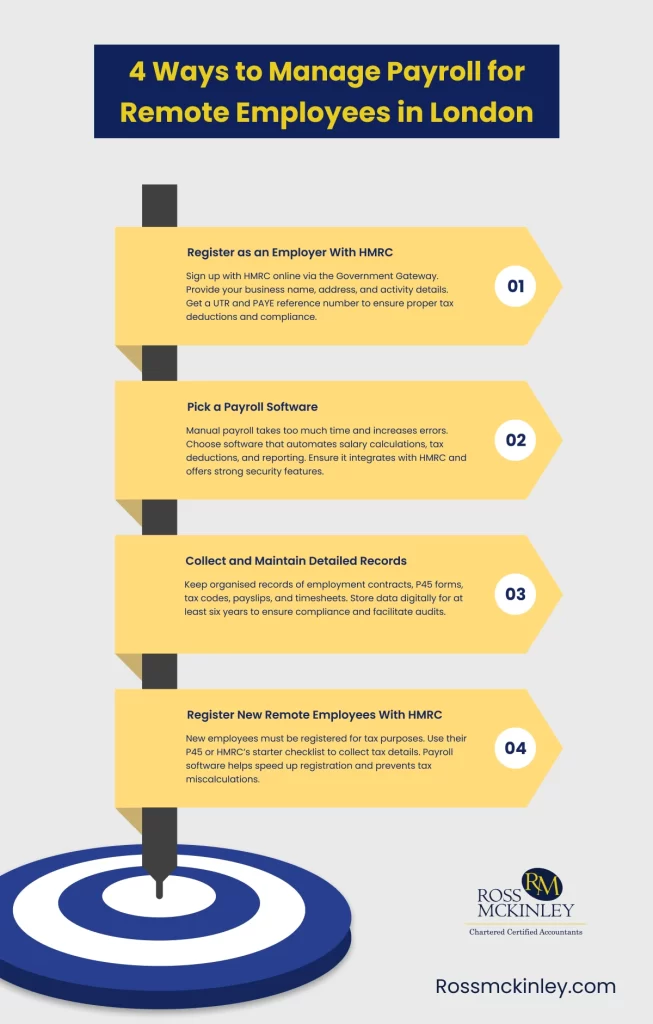
Table of Contents
What Is Payroll For Remote Employees?
Remote payroll means handling salaries, taxes, and benefits for employees working outside a traditional office. Their payments must be accurate and timely whether they live nearby or in another country.
Managing wages, deductions, and tax compliance requires a reliable system to keep everything in order. Thus, you can ask your HR and accounting teams to use payroll software to process payments from a central location. Secure remote access also allows them to easily track timesheets, calculate wages, and handle deductions.
Ways to Manage Payroll for Remote Employees in London
Here are ways to manage payroll for remote employees in London:
Register as an Employer With HMRC
Before running payroll, you must register your business with HMRC online through the Government Gateway. You need to provide details like your business name, address, and type of activities.
Once you register, HMRC assigns you a Unique Taxpayer Reference (UTR) and a PAYE reference number. The PAYE system ensures that your tax and National Insurance contributions get deducted correctly.
Keeping your PAYE details updated helps you report payroll information accurately. Timely payments to HMRC also prevent penalties and compliance issues.
Pick a Payroll Software
Manually handling payroll takes too much time and increases the risk of errors. Payroll software simplifies salary calculations, tax deductions, and National Insurance contributions. Choosing the right tool ensures smooth payroll processing and compliance with regulations.
Look for software that allows electronic payslip uploads and tax document access. It should integrate with HMRC for easy payroll reporting and FPS submissions. Security is essential, so pick a system with strong data protection features. Also, ensure it works well with your current payroll setup.
Collect and Maintain Detailed Records
Accurate employee records help with tax compliance and payroll management. HMRC advises storing payroll records for at least six years. Keeping everything organised makes handling audits, reporting, and employee queries easier.
You must keep employment contracts, P45 forms, and employee contact details. Other essential records include tax codes, payslips, and timesheets. Tracking leave, benefits, and deductions also ensures accurate payroll processing. Digital storage makes accessing and updating records more efficient.
Register New Remote Employees With HMRC
You must register every new remote employee with HMRC for tax purposes. If they have a P45, use the details to update their tax records. If not, HMRC’s starter checklist helps gather the required information.
This checklist helps to determine their tax code, ensuring accurate tax deductions. Payroll software speeds up this process by pre-filling details based on employee data. Updating tax records also avoids miscalculations, incorrect deductions, and potential compliance issues.
Five Measures You Must Take To Reduce Difficulties in Managing Remote Payroll
Managing remote payroll isn’t easy at all. Following are the steps you can take to manage it without any stress easily. These steps will help you exercise more control over your remote employees making it easier to track their working hours.
| Seven Measures You Must Take To Make Remote Payroll Management Easier |
| Use Cloud-Based Payroll Software |
| Ensure Compliance With Local Laws |
| Automate Time Tracking & Attendance |
| Provide Clear Payroll Communication |
| Standardise Payment Methods |
| Set Up a Payroll Calendar |
| Use Payroll Outsourcing for Growth |
Now that you have a know-how of the process, take these five measures to reduce difficulties in managing remote payroll:
Use Cloud-Based Payroll Software
Managing payroll manually leads to delays, errors, and compliance issues. Cloud-based payroll software makes the process smoother and more efficient. Online access lets you update employee records, process salaries, and track deductions easily.
A payroll manager benefits from automated tax calculations, real-time reporting, and secure data storage. These reduce errors and save time, and remote teams can access payroll details anytime, improving transparency and trust.
Ensure Compliance With Local Laws
Every country has different payroll rules, so it’s important to stay updated on legal changes. Following tax laws, social security regulations, and employment rules helps prevent penalties and legal issues.
Ross Mckinley offers payroll services to handle your complex compliance requirements. A professional service ensures tax filings, deductions, and employee benefits are processed correctly, remaining fully compliant with local laws.
Automate Time Tracking & Attendance
Manually tracking work hours leads to payroll mistakes and disputes. Automated time-tracking tools simplify attendance management and ensure accurate salary calculations. Employees can log their hours from anywhere, making payroll more efficient.
Payroll software with time-tracking integration helps monitor overtime, sick leave, and holidays. This way, a payroll manager in London ensures fair wages while keeping payroll records organised and up to date.
Provide Clear Payroll Communication
Confusion about salaries, deductions, or benefits causes frustration among employees. Clear communication ensures that everyone understands payroll policies and payment schedules. Regular updates help employees feel informed and reduce payroll-related queries.
An online portal lets employees quickly check payslips, tax deductions, and benefits. A payroll manager can also send reminders about important deadlines. When employees know what to expect, payroll processing becomes smoother and more transparent.
Standardise Payment Methods
Paying employees through different methods causes delays and processing errors. Standardising payments lets you send salaries on time without confusion. Using secure and efficient payment solutions also improves payroll accuracy.
A remote global payroll system helps manage international salaries, exchange rates, and tax regulations. Choosing a reliable payment method simplifies transactions for both local and global employees. Standardisation makes payroll faster, smoother, and free from unnecessary complications.
Conclusion
Handling payroll for remote employees requires proper registration, compliance, and efficient payroll tools. Keeping records accurate and using automation helps make the process smoother and stress-free.
Clear payroll policies and payment schedules must be set to effectively manage payroll for remote employees in London. Employees must understand salary structures, tax deductions, and benefits to avoid confusion. Regular updates on payroll changes keep them informed and reduce disputes.
You can also seek expert payroll services to ensure compliance with tax laws and employment regulations. When you stay proactive with payroll strategies, remote workforce management becomes easier, saving time and effort.