

The payroll landscape is changing fast, and you must adapt as stricter reporting rules take effect. Outdated methods create risks, so staying ahead protects your clients from costly mistakes.
Most importantly, manual payroll processes slow you down and increase errors. Digital tools help you meet legal requirements, improve accuracy, and simplify tax reporting. Thus, adopting smart solutions ensures a smooth transition and prevents last-minute complications.
This guide elaborates on how making tax digital for payroll helps businesses avoid penalties and what a London accountant can do to ensure a smooth shift.
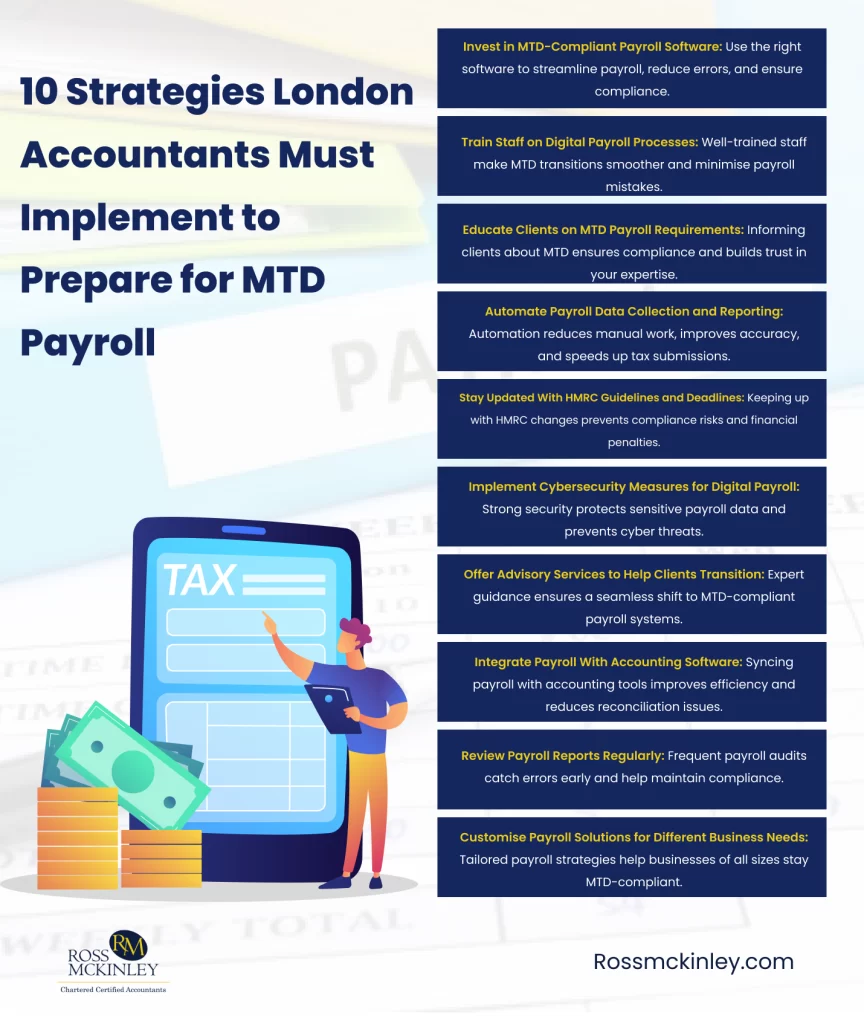
Table of Contents
What Is Making Tax Digital (MTD) for Payroll?
Payroll tax digitalization UK means using digital software to manage payroll taxes and report data to HMRC. Businesses that submit payroll information in real time through approved systems can easily ensure accuracy and compliance.
Moreover, this initiative reduces paperwork, minimises errors, and streamlines tax reporting for employers and accountants. Digital tools not only help your businesses stay organised but enable you to meet government requirements without unnecessary stress.
Why Making Tax Digital for Payroll Is Necessary in the 21st Century?
Still confused about whether to make tax digital or not? Here’s why making tax digital for payroll is necessary in the 21st Century:
| 5 Reasons Why Making Tax Digital for Payroll is Significant |
| Enhancing Compliance With HMRC Regulations |
| Minimises Manual Workload |
| Results in Less Payroll Errors |
| Early Adoption of MTD Promises Long-Term Success |
| Improves Payroll Transparency and Accessibility |
Enhancing Compliance With HMRC Regulations
HMRC keeps updating tax regulations, and businesses must follow them to avoid penalties. Digital payroll systems help you stay compliant by automating tax calculations and real-time submissions.
Using outdated methods increases the risk of errors, delays, and, most importantly, unnecessary fines. With digital tools, you can meet deadlines while keeping records accurate and in order.
Minimises Manual Workload
Managing payroll manually takes time and increases stress, especially for growing businesses. However, digital solutions handle such repetitive tasks so that you can prioritise your work.
Embracing automation speeds up payroll processing while reducing paperwork and human errors. This efficiency ensures smooth operations and frees up time for strategic financial planning.
Results in Less Payroll Errors
Even small payroll mistakes cause big issues, including tax miscalculations and employee payment delays. On the other hand, digital systems ensure accuracy by handling tax codes, deductions, and real-time updates.
Fixing payroll errors wastes time and creates frustration for you and your clients. So, you must switch to digital payroll to prevent these problems and keep everything running smoothly.
Early Adoption of MTD Promises Long-Term Success
Businesses that adopt MTD early gain a competitive edge by avoiding last-minute adjustments. Digital payroll ensures smooth transitions as regulations evolve, keeping you ahead of the curve.
Waiting too long to switch creates unnecessary stress and disruption. Embracing digital payroll now sets you up for long-term efficiency, growth, and hassle-free tax compliance.
7 Strategies for London Accountants to Prepare for MTD Payroll
Ready to embrace MTD payroll to save time, reduce stress, and keep your clients compliant? This guide for London accountants for making tax digital helps you confidently lead the transition so check these seven strategies.
Invest in MTD-Compliant Payroll Software
Choosing the right software ensures compliance while reducing payroll errors and simplifying tax submissions. Digital tools help accountants manage payroll efficiently without struggling with last-minute issues.
Outdated systems slow down operations and increase risks, making compliance harder. Switching to MTD-compliant software streamlines payroll reporting, ensuring accuracy and saving time.
Train Staff on Digital Payroll Processes
Your team must understand digital payroll systems to handle MTD changes effectively. Regular training keeps them updated on software upgrades, legal requirements, and potential challenges.
Lack of knowledge leads to costly payroll mistakes, causing compliance issues. Ongoing training improves accuracy, reduces stress, and ensures a smooth transition to digital payroll.
Educate Clients on MTD Payroll Requirements
Many businesses are unaware of MTD changes and their impact on payroll operations. Educating clients about legal requirements helps them stay prepared and prevents last-minute compliance issues.
Providing detailed guides, hosting training sessions, or offering consultations makes the transition smoother. Informed clients trust your expertise and rely on your services for long-term payroll management.
Automate Payroll Data Collection and Reporting
Manual payroll processes are slow and prone to errors, making compliance difficult. Automating payroll data collection ensures accuracy, speeds up tax reporting, and minimises human mistakes.
Digital tools sync payroll data directly into reports without requiring manual adjustments. Automation simplifies payroll management, reduces processing time, and ensures compliance with MTD regulations.
Stay Updated With HMRC Guidelines and Deadlines
Payroll regulations change frequently, and missing updates can lead to costly penalties. Staying informed about HMRC guidelines ensures compliance and helps businesses avoid unnecessary financial risks.
Ross Mckinley understands the importance of staying ahead of the new rules to help their clients effectively. With our expert payroll services, you always receive the latest compliance updates. Our team provides tailored support, keeping your payroll operations efficient, accurate, and stress-free.
Implement Cybersecurity Measures for Digital Payroll
Digital payroll systems store sensitive financial data, making security a top priority. Strong cybersecurity measures prevent data breaches, protect client information, and ensure payroll compliance.
Encrypted payroll software, secure logins, and regular data backups reduce cyber risks. Additionally, strict security protocols strengthen data protection and build client trust.
Offer Advisory Services to Help Clients Transition
Clients need expert guidance to shift from manual payroll to MTD-compliant systems. Offering advisory services positions you as a valuable resource during this transition.
Providing tailored solutions and ongoing support helps businesses stay compliant. A proactive approach strengthens client relationships and boosts long-term growth.
Conclusion
Embracing digital payroll systems will keep your businesses compliant and reduce tax-related stress. As a London accountant, you must stay informed, adopt the right tools, and guide clients through this transition.
Choosing HMRC-approved software simplifies tax reporting, improves accuracy, and saves valuable time. Prioritise providing regular training to your teams to help them understand updates and avoid costly errors in payroll management.
Staying ahead of making tax digital for payroll also helps accountants build trust and offer better services. Moreover, going digital will also help you strengthen compliance, maximise efficiency, and prevent unnecessary penalties.