
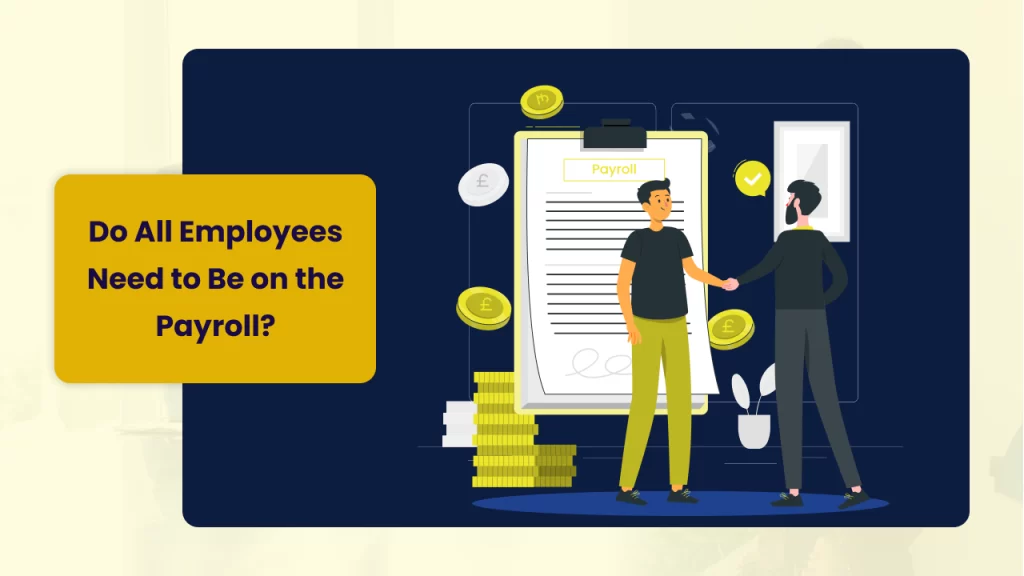
Let’s talk about payroll—specifically, whether every employee needs to be on it. It’s a question that keeps many business owners up at night, especially when juggling different types of workers like full-time staff, freelancers, and contractors. The short answer? It depends. But don’t worry, we’re here to break it down in a way that won’t make your head spin.
In this blog, we’ll explore who needs to be on payroll, who doesn’t, and why it matters. Whether you’re a small business owner or just curious about how payroll works, this guide will help you navigate the murky waters of employment classifications and HMRC regulations. Let’s dive in!
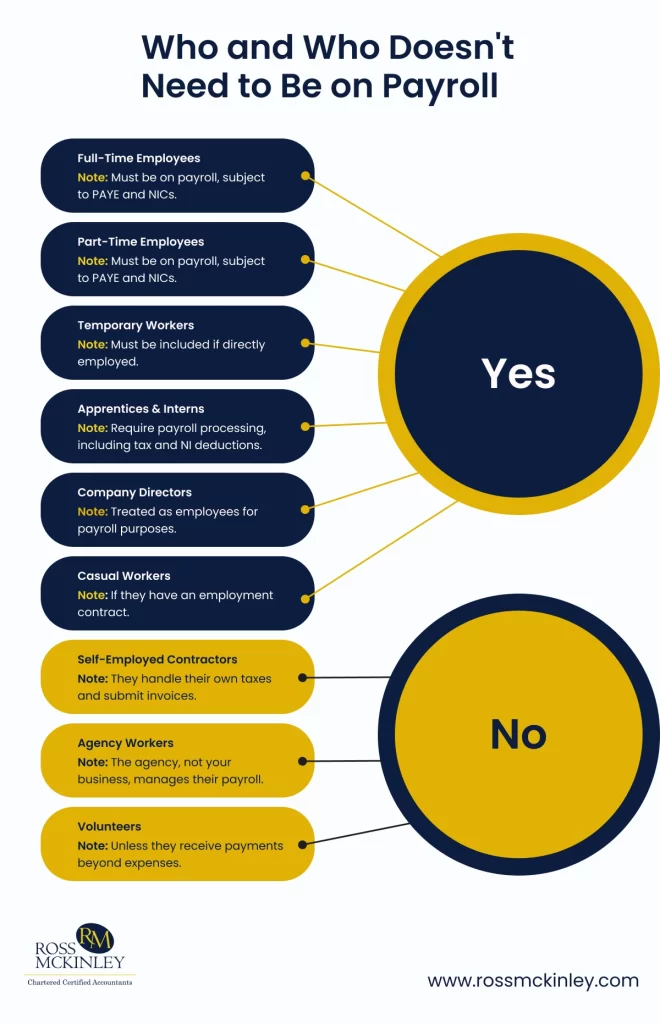
Table of Contents
Do All Employees Need to Be on the Payroll?
Payroll is paying a company’s employees, ensuring they receive their hard-earned money accurately and on time. But, it’s so much more than just handing out paychecks.
Being “on payroll” means an employee is formally registered with your business, and their wages are processed through your payroll system. This includes calculating their gross pay, deducting taxes and National Insurance contributions, and reporting everything to HMRC via Real Time Information (RTI).
But not all workers are created equal. Some are employees, while others are self-employed contractors or freelancers. The distinction matters because it determines who needs to be on payroll and who doesn’t.
Who Needs to Be on Payroll?
Here’s the tricky part, not everyone who works for you needs to be on payroll. Full-time employees? Absolutely. Freelancers? Not so much. And then there’s that gray area in between. So, who makes the cut? Let’s break it down so you can stop worrying and start paying your people the right way.
Full-Time and Part-Time Employees
If someone works for you under an employment contract, they’re considered an employee and must be on payroll. This includes Full-time and part-time staff, Temporary workers on fixed-term contracts, and Apprentices and interns.
Employees are entitled to benefits like sick pay, holiday pay, and pension auto-enrolment, which are managed through payroll.
Directors
If you’re a company director, you’re technically an employee of your own business. This means you need to be on payroll, even if you’re the only person in the company. Directors are subject to PAYE (Pay As You Earn) and National Insurance contributions, just like other employees.
Casual Workers
Casual workers, those who work irregular hours, are also considered employees if they have an employment contract. This means they need to be on payroll, even if they only work for you occasionally.
Who Doesn’t Need to Be on Payroll?
Now that we’ve covered who does need to be on payroll, let’s talk about who doesn’t need to be on payroll because not everyone who works for you needs to be on your payroll system. Freelancers, contractors, and even some casual workers might fall into this category, but it’s not always black and white.
- Self-Employed Contractors
Self-employed contractors or freelancers are not employees, so they don’t need to be on payroll. Instead, they invoice you for their services, and you pay them without deducting taxes or National Insurance. It’s their responsibility to handle their tax affairs.
- Agency Workers
If you hire workers through an agency, they’re typically employed by the agency, not your business. This means the agency handles their payroll, and you don’t need to include them in your payroll system.
- Volunteers
Volunteers who don’t receive payment other than reasonable expenses, don’t need to be on payroll. However, if you pay them more than expenses, they may be considered employees and need to be added to your payroll.
Why Does It Matter?
Alright, so you’ve figured out who needs to be on payroll and who doesn’t. But why does it even matter? Can’t you just pay people and call it a day? Well, not exactly. Payroll isn’t just about handing out money, it’s about compliance, fairness, and keeping your business running smoothly.
Legal Compliance
HMRC takes payroll seriously. If you fail to put employees on payroll or misclassify workers, you could face penalties, fines, or even legal action. Staying compliant ensures you’re on the right side of the law.
Employee Rights
Employees are entitled to certain rights, like minimum wage, holiday pay, and pension contributions. By putting them on payroll, you ensure they receive these benefits and feel valued.
Financial Transparency
Payroll provides a clear record of your business’s financial obligations, from wages to taxes. This helps with budgeting and making informed decisions.
Avoiding HMRC Audits
Misclassifying workers or failing to report payroll accurately can trigger an HMRC audit. Trust us, you don’t want that. Proper payroll management keeps the taxman at bay.
Why Choose Ross McKinley for Your Payroll Needs?
Navigating the complexities of UK payroll can be challenging, but you don’t have to do it alone. Ross McKinley offers comprehensive payroll services tailored to your business needs. With over 46 years of combined experience, our team ensures accuracy, compliance, and efficiency in managing your payroll.
Trust us to handle the intricacies of payroll so you can focus on what you do best—growing your business.
Conclusion
So, do all employees need to be on payroll? Yes, if they’re employees. But not all workers are employees, and understanding the difference is key to staying compliant and avoiding headaches.
Whether you’re managing a team of full-time staff or hiring freelancers for a project, getting payroll right is essential. It’s not just about paying people, it’s about protecting your business, supporting your employees, and keeping HMRC happy.