

Brexit has reshaped the business landscape, and payroll is no exception. For London employers, understanding these changes is significant to avoid costly mistakes. New rules around immigration, tax, and compliance are now in play.
From hiring EU workers to managing cross-border payments, Brexit has introduced fresh challenges. Thus, as an employer, you must adapt to updated regulations to ensure smooth payroll operations. Moreover, staying informed will also help you to maintain compliance and avoid penalties.
Wondering how the Brexit impact on payroll affects your business? This blog breaks down the key payroll changes post-Brexit and provides a brief explanation of their immediate aftermath. So, let’s get started so you can learn to stay ahead in this evolving environment.
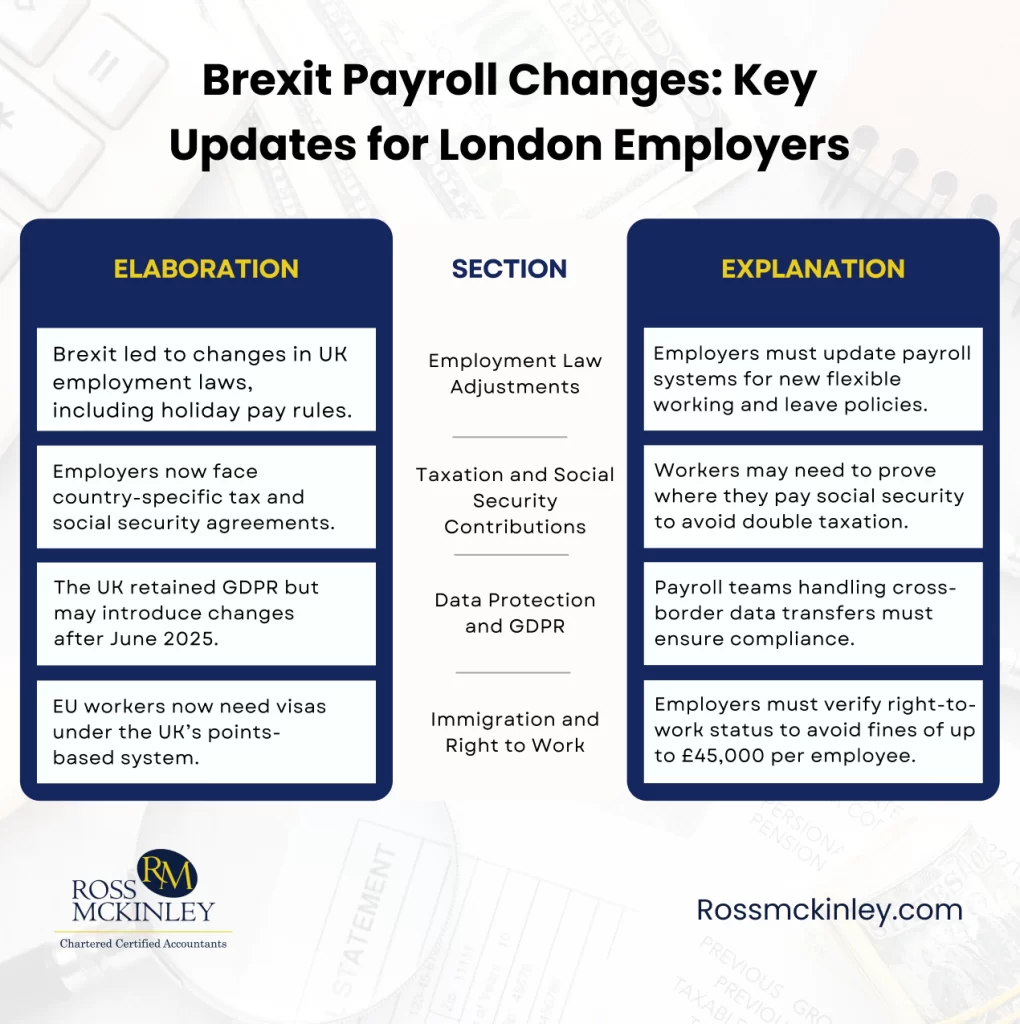
Table of Contents
The Immediate Aftermath of Brexit
The early days after Brexit were messy and unclear for UK businesses. Policies took time to roll out, leaving employers unsure about the rules. The COVID-19 pandemic made things even harder during this period.
Former Prime Minister Boris Johnson pushed to ‘get Brexit done’ without extending the transition. This worried employers about EU workers’ rights, holiday pay, and sick leave. The end of free movement between the UK and EU was one of the first significant Brexit impacts on payroll and HR.
After January 2021, EU nationals had to apply under the UK’s new immigration system. Employers had to check their right to work, adding more paperwork. The UK also left the EU Social Security rules, creating new tax challenges for payroll teams.
The Brexit long-term effects are still unfolding, with businesses adjusting to new social security and tax rules. Employers must ensure workers only pay into one country’s system to avoid double taxation.
4 Key Changes for London Employers
The long-term effects of Brexit have brought significant shifts for businesses in the capital. Here are four key changes for London employers to watch, from employee law adjustments to payroll compliance.
Employment Law Adjustments
After Brexit, UK employment laws saw gradual changes, starting with the Harpur Trust v Brazel ruling in 2022. This decision shifted how holiday pay is calculated for part-time workers, moving away from EU guidelines. Recent updates also expanded rights for flexible working and parental leave, requiring payroll teams to update their systems.
The government has suggested reviewing the EU-derived Working Time Directive, which covers working hours and rest breaks. While no significant changes have happened yet, employers should stay prepared for potential updates. Payroll teams must ensure systems reflect these adjustments to avoid compliance issues.
These changes highlight the impact of Brexit on the euro currency and broader employment practices. Employers must stay informed to manage payroll effectively and support their workforce under evolving rules.
Taxation and Social Security Contributions
Brexit added complexity to managing tax and social security for EU nationals. Employers now deal with country-specific agreements and Certificates of Coverage to avoid double taxation. Payroll teams must ensure compliance with new rules, which can increase costs and administrative work.
The UK negotiated separate agreements with individual EU countries, replacing the former EU-wide system. Workers may need to prove where they pay social security contributions to avoid paying twice. This adds extra steps for employers managing cross-border payroll.
Proper management ensures workers’ pay is put into the correct system, avoiding penalties and extra costs.
Data Protection and GDRP
The UK retained GDPR but introduced clauses for future changes. Cross-border data transfers may need extra safeguards, especially for immigration-related data. Payroll teams handling sensitive employee information must stay alert to these evolving rules.
The current UK/EU GDPR agreement will last until June 2025. Employers should prepare for potential updates to data protection laws after this date. Payroll teams must ensure they handle employee data securely and comply with new requirements.
Staying compliant with data protection rules is crucial for businesses operating across borders. Employers must review their processes regularly to avoid risks and penalties.
Immigration and Right to Work
The end of free movement means EU workers now face visa requirements under the UK’s points-based system. Employers must verify right-to-work status, adding paperwork and compliance costs. Fines for non-compliance can reach £45,000 per employee, making this a critical area for HR teams.
Employers must carry out regular checks to ensure workers have the correct visas and permits. This adds to the administrative burden, especially for businesses hiring EU talent. Payroll teams must work closely with HR to manage these requirements effectively.
Staying compliant with immigration rules is essential to avoid fines and maintain a smooth hiring process.
How Our Payroll System Can Help?
At Ross McKinley, we simplify payroll for London employers with accurate, timely, and secure solutions. Our services handle everything from salaries and bonuses to taxes and deductions, ensuring compliance with GDPR and UK laws. We take the stress out of payroll so you can focus on growing your business.
Our tailored payroll systems adapt to your needs, whether you’re managing PAYE, NIC, or statutory payments like SSP and SMP. We also help with employee payslips, P60s, and year-end returns like P35. With Ross McKinley, you get a reliable partner to manage payroll efficiently, even with the Brexit impact on euro currency and cross-border complexities.
Conclusion
Brexit has reshaped payroll rules, affecting tax policies, visa requirements, and worker rights. Employers in London must adjust their payroll systems, update contracts, and ensure compliance with new regulations. Ignoring these key changes for London employers can lead to fines, payroll errors, and legal trouble.
To stay ahead, businesses should review payroll processes, work with legal experts, and track government updates. Updating payroll software and keeping employee records accurate will prevent compliance issues. Clear communication with staff about any changes is also essential.