

London employers have a lot on their plate, and workplace pensions add to the load. With strict legal rules, handling pensions isn’t just about ticking a box. Missing deadlines or making mistakes can bring hefty fines, so businesses must stay ahead.
Managing pensions takes time, effort, and a solid strategy. Employers must assess staff, set up a scheme, and ensure ongoing compliance. Keeping up with these tasks while running a business can feel challenging, but there’s a way to make it easier.
To help you out with your auto-enrolment pension duties, we have outlined everything in our latest read. So give it a read, avoid costly errors, and take the pressure off.
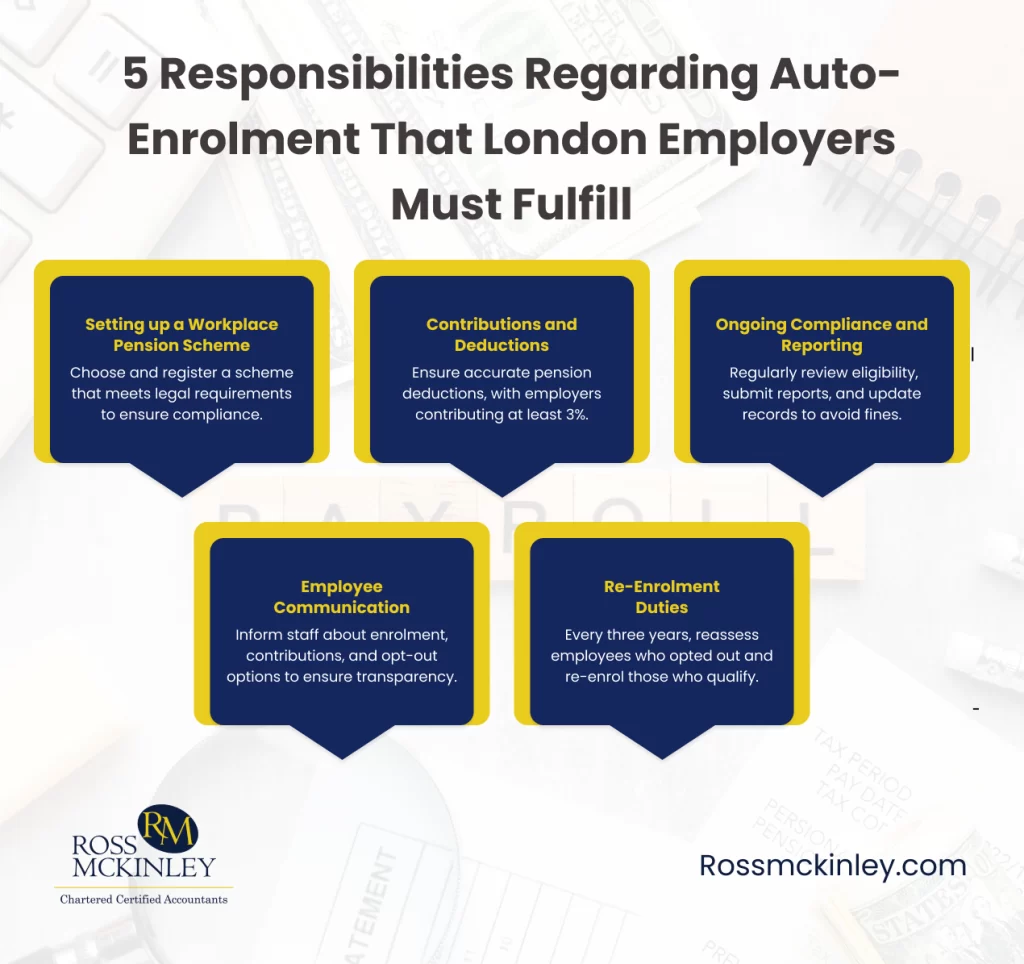
Table of Contents
What Is Pensions Automatic Enrolment?
The government requires businesses to enrol eligible workers into a pension scheme. Therefore, the rule ensures that employees save for retirement while working.
Ignoring pensions automatic enrolment can lead to fines, so businesses must follow the rules. For example, a cafe owner in London must enrol staff earning above the threshold.
Who Needs to Enrol?
Employers must enrol workers aged 22 or older who earn at least £10,000 a year, and even part-time staff qualify if they meet the income limit.
However, employees earning below the threshold can still join if they choose. But employers must also contribute to their pensions, making it a shared responsibility.
Legal Requirements and Deadlines
Every employer has a staging date, the deadline for setting up a pension scheme. This date depends on when the business first hired employees, and missing it leads to warnings, fines, and potential legal action.
After the staging date, businesses must enrol eligible workers and start making contributions. Employers must also keep records, submit reports, and ensure ongoing compliance. Ignoring these duties can bring penalties and damage a company’s reputation.
Employer Responsibilities in Auto-Enrolment
Handling employer responsibilities in auto-enrolment means more than just onboarding employees. Here are the primary duties of a London employer:
Setting up a Workplace Pension Scheme
Your business must choose a pension scheme that meets government requirements. Researching providers helps you find one that balances cost and employee benefits. A well-chosen scheme supports staff while keeping expenses manageable.
Once selected, you must register the scheme and enrol eligible employees. Delays in enrolment may lead to penalties, so handling the process on time is mandatory. The proper setup ensures compliance and prevents unnecessary fines.
Contributions and Deductions
Employers must contribute at least 3% of an employee’s qualifying earnings. Employees also make contributions, ensuring they build a secure retirement fund. These payments are essential for meeting pension regulations.
Automating deductions through payroll simplifies the process and reduces errors. It ensures accurate contributions are made on time, keeping your business compliant. A smooth system prevents unnecessary delays or miscalculations.
Ongoing Compliance and Reporting
Your business must regularly review employee eligibility for auto-enrolment. Salary increases or role changes can affect pension contributions, requiring careful monitoring. Keeping track of these adjustments ensures accurate deductions.
You also need to submit reports to The Pensions Regulator. Proper documentation and timely reporting prevent fines and demonstrate compliance. Staying proactive makes auto-enrolment easier to manage.
How Much Is Auto-Enrolment Going to Cost?
Auto-enrolment pension duties of London employers also mean planning for financial commitments. Here’s what London employers can do to calculate the cost of auto-enrolment:
| 7 Ways to Calculate the Cost of Auto-Enrolment |
| Analyse Your Workforce |
| Minimum Contributions |
| Qualifying Earnings |
| Prepare a Budget Based on Minimum Contributions |
| Payroll Processing Costs |
| Administrative Expenses |
| Future Contribution Increases |
Analyse Your Workforce
Employers must check how many workers qualify for auto-enrolment since full-time, part-time, and temporary staff all impact overall costs.
Most importantly, understanding workforce structure helps estimate pension expenses. Businesses with more eligible employees will need a higher budget for contributions.
Minimum Contributions
Employers must contribute at least 3% of an employee’s qualifying earnings, and employees also pay in, making the total minimum 8%.
Planning for minimum contributions helps your business to manage costs and an automated payroll deductions system ensures accurate payments and avoids compliance issues or penalties.
Qualifying Earnings
Qualifying earnings include salary, bonuses, and overtime between £6,240 and £50,270 per year, and the total earnings determine pension contributions.
Understanding what counts as qualifying earnings helps businesses budget correctly, preventing underpayments and ensuring compliance with pension laws.
Prepare a Budget Based on Minimum Contributions
Employers should estimate their total pension costs using workforce size and earnings data to plan and avoid unexpected financial strain.
Moreover, budgeting enables your business to meet its obligations while maintaining cash flow. Thus, you need a well-structured plan to prevent last-minute issues and smooth operations.
Outsource Auto-Enrolment for a Hassle-Free Process
Managing pensions can take time, but outsourcing makes it easier, and expert help allows your business to avoid errors and stay compliant. Outsourcing also saves time, allowing you to focus on business growth. Instead of handling complex regulations, you get expert support and reliable payroll services to prevent costly mistakes and reduce administrative burdens.
Thus, Ross Mckinley offers payroll services that simplify the process, and the team handles enrolments, contributions, and compliance reporting. Our auto-enrolment pension guide for London employers ensures that your business meets all legal requirements. With our support, your business meets pension duties without extra stress.
Conclusion
Auto-enrolment brings legal duties, but planning makes the process easier. Meeting auto-enrolment pension duties ensures compliance, employee financial security, and smooth business operations.
Furthermore, choosing the right pension scheme simplifies ongoing management. Reviewing contributions regularly keeps costs under control while meeting legal requirements. Using payroll software reduces errors and ensures accurate deductions every time.
Seeking expert support makes a big difference, and a trusted payroll provider can handle compliance, reporting, and enrolments efficiently. Outsourcing saves time, allowing you to focus on business growth and avoid last-minute stress.