

Payroll mistakes can cost your business more than you think. Late payments, wrong tax codes, and missed deadlines lead to fines. If you run a business in London, staying on top of payroll rules is necessary.
Even minor errors can bring hefty penalties from HMRC. Many businesses struggle with tax rates, employee records, and payment deadlines. With rules constantly changing, keeping payroll correct can feel like a tough job.
Want to keep your business safe from fines? This blog elaborates on how to avoid costly penalties for London businesses, including a brief explanation of payroll tax penalties. Read on to make sure your payroll runs smoothly and penalty-free.
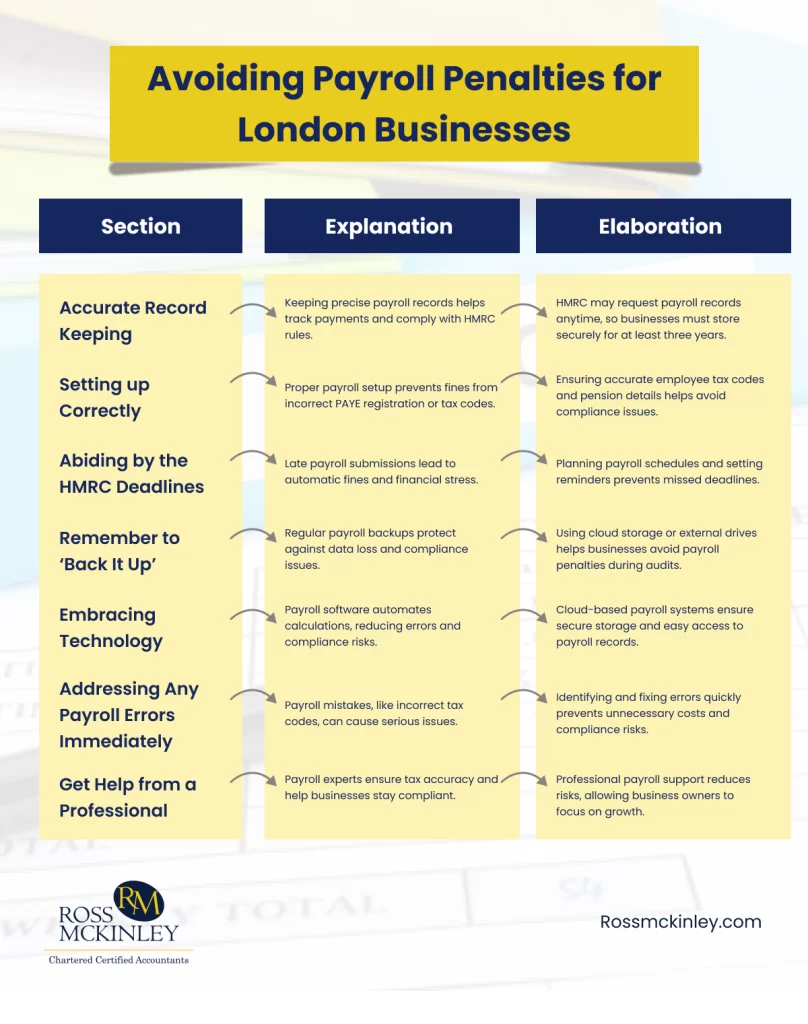
Table of Contents
What Are Payroll Tax Penalties?
Payroll tax penalties are fines businesses face for mistakes in paying or reporting payroll taxes. These taxes include income tax, National Insurance contributions, and other wage deductions. Employers must handle these payments correctly to avoid trouble with tax authorities.
Different countries define payroll taxes differently. Some focus on social security contributions, while others include all taxes linked to employee wages. No matter the definition, businesses must follow the correct payroll tax rules to stay compliant and avoid costly fines.
Missing deadlines, making errors in tax calculations, or failing to submit reports can lead to payroll tax penalties. These fines grow fast, especially when unpaid taxes start accruing interest. Businesses may face more significant penalties or legal action if tax authorities believe the mistake was intentional.
Payroll tax compliance isn’t just about avoiding fines. It is also essential to protect your business reputation. Staying on top of tax payments keeps finances stable and ensures smooth operations. Following the correct process helps businesses avoid extra payroll expenses.
7 Ways to Avoid Costly Penalties for London Businesses
Payroll errors can lead to hefty fines and unnecessary financial stress. To avoid costly payroll penalties for London businesses, following the proper steps is essential.
Here are seven ways to help you keep your payroll accurate and protect your business from unexpected expenses.
| Section | Explanation | Elaboration |
| Accurate Record Keeping | Keeping precise payroll records helps track payments and comply with HMRC rules. | HMRC may request payroll records anytime, so businesses must store them securely for at least three years. |
| Setting up Correctly | Proper payroll setup prevents fines from incorrect PAYE registration or tax codes. | Ensuring accurate employee tax codes and pension details helps avoid compliance issues. |
| Abiding by the HMRC Deadlines | Late payroll submissions lead to automatic fines and financial stress. | Planning payroll schedules and setting reminders prevents missed deadlines. |
| Remember to ‘Back It Up’ | Regular payroll backups protect against data loss and compliance issues. | Using cloud storage or external drives helps businesses avoid payroll penalties during audits. |
| Embracing Technology | Payroll software automates calculations, reducing errors and compliance risks. | Cloud-based payroll systems ensure secure storage and easy access to payroll records. |
| Addressing Any Payroll Errors Immediately | Payroll mistakes, like incorrect tax codes, can cause serious issues. | Identifying and fixing errors quickly prevents unnecessary costs and compliance risks. |
| Get Help from a Professional | Payroll experts ensure tax accuracy and help businesses stay compliant. | Professional payroll support reduces risks, allowing business owners to focus on growth. |
Accurate Record Keeping
Keeping precise and up-to-date payroll records is a must for any business. Proper records help you track payments, deductions, and compliance with HMRC rules.
HMRC may ask for payroll records anytime, so you must store them. Businesses must keep payslips, tax deductions, and pension contributions for at least three years.
Moreover, accurate records help prevent employee disputes over wages and deductions. Mistakes in payroll records can cause legal issues, so a well-maintained payroll system keeps operations smooth and reduces financial risks.
Setting up Correctly
Setting up payroll correctly from the start helps businesses in the UK avoid costly penalties. Incorrect PAYE registration, wrong tax codes, or missing National Insurance details can lead to fines. A simple mistake in the setup can create more significant issues later.
Employers must ensure all new employees have the correct tax codes and payment details. Verifying work status, pension contributions, and deductions helps avoid payroll penalties. Every business detail must match HMRC’s requirements to prevent compliance issues.
Abiding by the HMRC Deadlines
Missing payroll deadlines leads to automatic fines from HMRC. Businesses must submit PAYE, National Insurance, and tax payments on time because delays cause unnecessary stress and financial strain.
HMRC has strict deadlines for payroll reporting, including Real-Time Information (RTI) submissions. Thus, you must plan according to the payroll schedules to stay on track and avoid late fees. You can ask your team to set regular reminders and a clear payroll calendar to avoid missing deadlines.
Remember to ‘Back It Up’
Regular backups ensure payroll records stay safe and you avoid costly penalties that can result due to missing information. A system failure or accidental deletion should never cause payroll issues.
Keeping digital and physical backups is necessary to protect your business against data loss. Secure cloud storage or external drives help avoid payroll penalties during audits. Having multiple copies ensures business continuity if payroll records are lost or damaged.
A backup system can help you enjoy peace of mind and protect your business finances simultaneously.
Embracing Technology
Using payroll software makes handling salaries and tax payments more manageable. Automated systems help you reduce errors and avoid costly payroll-related penalties. With built-in tax calculations, businesses stay compliant without extra effort.
A payroll software tracks tax codes, deductions, and National Insurance payments. It also sends reminders for upcoming deadlines, reducing the risk of payroll tax penalties. Technology simplifies payroll management and prevents manual calculation mistakes.
Cloud-based payroll systems ensure secure data storage and easy access to records.
Addressing Any Payroll Errors Immediately
Employees rely on accurate payroll for their earnings and benefits, so payroll mistakes should never be ignored. Fixing errors early helps businesses avoid extra payroll expenses and bigger issues with HMRC.
Common payroll mistakes include incorrect tax codes, missing deductions, or unpaid contributions.
Identifying and correcting these issues quickly and regularly helps prevent errors from going unnoticed.
Get Help from a Professional
Payroll rules change often, making compliance difficult for businesses. Hiring an expert like Ross Mckinley for payroll ensures accurate payroll processing and correct tax filings.
Accountants or payroll specialists handle tax calculations, deductions, and reporting. Their expertise reduces the risk of penalties so you can focus on growing your business instead of worrying about compliance.
If you want to avoid extra payroll expenses, get payroll support from Ross Mckinley to fulfil your business goals.
Conclusion
Avoiding payroll mistakes keeps businesses compliant and financially secure. Accurate record-keeping, timely submissions, and the right tools help avoid costly payroll penalties for London businesses. Taking proactive steps prevents fines and unnecessary financial stress.
Regular payroll audits help identify errors before they become serious issues. Staying updated with HMRC regulations ensures payroll processes remain accurate and compliant. Early corrections prevent minor mistakes from turning into expensive penalties.
Consider using payroll software to simplify tax calculations and deadline tracking. Seeking expert advice can also provide clarity on complex payroll rules. A well-managed payroll system keeps businesses running smoothly and legally secure.