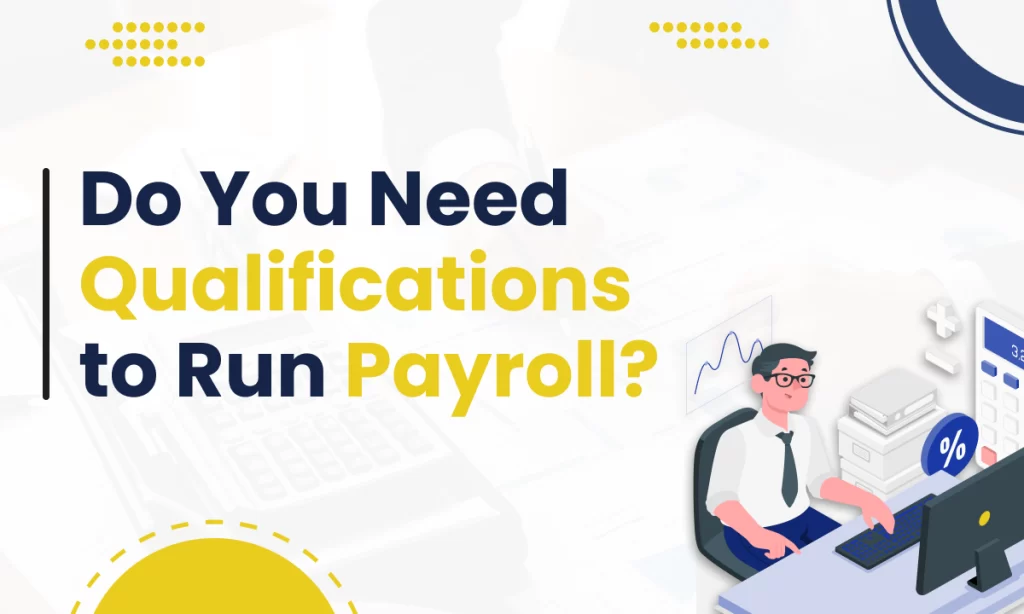
Let’s face it, payroll isn’t exactly the most glamorous topic, but it’s one of those behind-the-scenes heroes that keeps businesses running smoothly. Whether you’re an employee eagerly awaiting your paycheck or a business owner trying to stay compliant with tax laws, payroll is a big deal.
But here’s the million-dollar question: do you need a fancy degree or a stack of certifications to run payroll? Or can you just wing it with a calculator and a cup of coffee?
In this blog, we’ll dive into the nitty-gritty of payroll, explore whether qualifications are a must, and give you the lowdown on how to become a payroll pro.
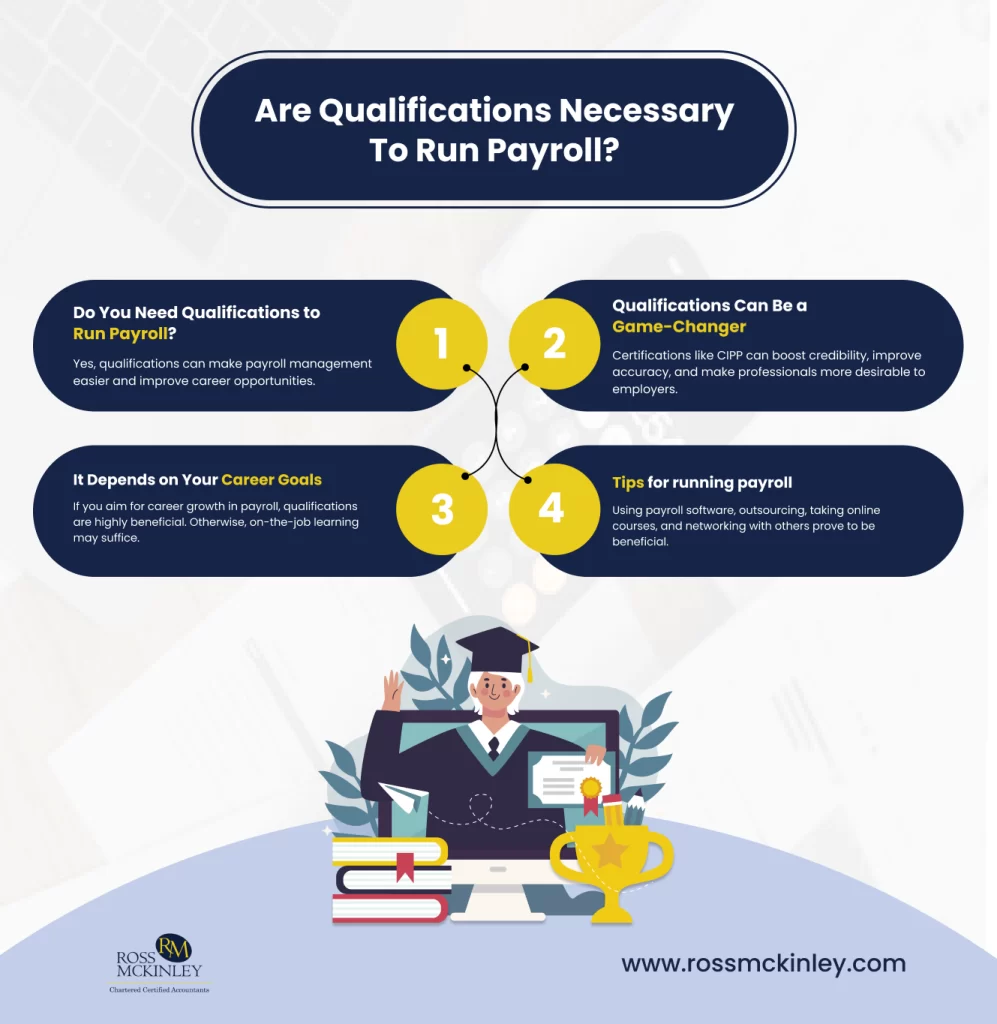
Table of Contents
Do You Need Qualifications to Run Payroll?
Payroll is more than just paying employees; it’s a vital process that ensures compliance, accuracy, and timely payments. In the UK, it involves calculating gross wages, deducting taxes (like income tax and National Insurance), managing pension contributions, and even accounting for student loan repayments.
And Trust me running payroll can get pretty complicated. While you don’t necessarily need a degree to start a career in payroll, doing it without any professionals involved can cause you some major headaches. So, whether you’re considering a career in payroll or just curious to DIY it, keep reading because we’ve got you covered.
What Does a Payroll Specialist Do?
Before we dive into qualifications, let’s talk about what a payroll specialist does. Spoiler alert: it’s more than just handing out paychecks.
Payroll specialists are responsible for ensuring employees are paid accurately and on time. This includes calculating wages, deducting taxes, and managing benefits like pensions and health insurance. They also handle compliance with tax laws, file reports with government agencies, and resolve any payroll-related issues that pop up.
Do You Need Formal Qualifications to Run Payroll?
Now, let’s get to the core of the topic: do you need qualifications to run payroll? The answer isn’t binary ( Yes or No).
- You Need proper Expertise
In the UK, running payroll requires proper expertise to ensure compliance with HMRC regulations. While formal qualifications aren’t always mandatory but the complexities of tax codes, deductions, and tax laws make it a challenging task to manage alone.
That’s where professional payroll services come in. Why risk costly mistakes when you can focus on growing your business while leaving payroll to the pros?
- Yes, Qualifications Can Be a Game-Changer
While you can technically run payroll without qualifications, having them can open doors and make your job easier.
For example, certifications like the Chartered Certified Institute of Payroll Professionals (CIPP) qualification in the UK are highly respected in the industry. These certifications demonstrate your knowledge of payroll systems, tax laws, and compliance requirements, making you a more attractive candidate for employers.
- It Depends on Your Career Goals
If you’re looking to climb the career ladder in payroll, qualifications are almost essential. Employers often prefer candidates with certifications or relevant degrees, especially for senior roles.
On the other hand, if you’re just dipping your toes into payroll or running it for a small business, you might be able to get by with on-the-job training and self-study.
How to Become a Payroll Specialist
If you’re aiming to become a payroll specialist, here’s a quick roadmap: Start with a background in finance, accounting, or business for a solid foundation, though a degree isn’t mandatory.
Boost your credentials with certifications like CIPP, APA, or AAT, which are highly valued in the industry. Gain hands-on experience through entry-level roles like payroll administrator to build practical skills.
Stay updated on ever-changing payroll laws by joining professional organizations and attending workshops. Finally, leverage payroll software to streamline tasks and minimize errors.
Advantages and Disadvantages of Hiring a Qualified Payroll Professional
Using the wrong tax code might leave employees paying too much or too little tax while missing important deadlines for RTI submissions can result in costly penalties. Even with the best intentions, Doing payroll yourself can cause major business headaches. The good news? These mistakes are avoidable, and the pros of payroll are here to the rescue.
Hiring a payroll professional can prove to be beneficial in many ways, such as Expert Compliance which ensures adherence to tax laws and regulations. It helps in scalability as well. Our team here at Ross McKinley is trained on the latest regulations and double-checks entries for accuracy, with regular updates that can save you time and stress.
Ross McKinley takes the hassle out of payroll so you can focus on what matters—running your business. Here’s a quick summary of the advantages and disadvantages of hiring a qualified payroll professional.
| Advantages | Disadvantages |
| Expert Compliance – Ensures adherence to tax laws and regulations. | Loss of Control – Less oversight over payroll processing. |
| Reduced Stress – Eliminates payroll complexities and administrative burdens. | Potential Communication Delays – Dependence on external providers may slow response times. |
| Access to Advanced Technology – Uses cutting-edge payroll software and automation. | Security Concerns – Sharing sensitive payroll data with a third party increases risk. |
| Scalability – Easily adapts to business growth and workforce changes. | Less Flexibility – Customizing payroll processes may be limited by provider constraints. |
Why Choose Ross Mckinley?
Looking for a seamless, stress-free payroll solution? Look no further than Ross McKinley! Whether you’re a small business owner or managing a growing team, we offer expert payroll management tailored to your needs.
Ross McKinley takes the hassle out of payroll, so you can focus on what matters—running your business. Say goodbye to payroll headaches and hello to peace of mind with us!
Conclusion
So, do you need qualifications to run payroll? Not always, but they certainly help. Whether you’re a small business owner or an aspiring payroll specialist, having the right knowledge and skills can make all the difference. While formal qualifications aren’t mandatory, they can boost your credibility, open up career opportunities, and make your job easier.
And there you have it—a complete guide to running payroll with or without qualifications. Whether you’re just starting or looking to level up your skills, the world of payroll is full of opportunities. So, grab that calculator (or software) and get started!