
Let’s be honest, no one wants to overpay for something as essential as payroll. Whether you’re a small business owner, a freelancer with a few employees, or just someone trying to figure out how much payroll will eat into your budget, understanding the costs is crucial.
In this blog, we’ll break down everything you need to know about payroll costs in the UK. From DIY options to fully managed services, we’ll cover it all. By the end, you’ll have a clear idea of how much payroll costs in the UK, what to expect and how to choose the best payroll solution for your business.
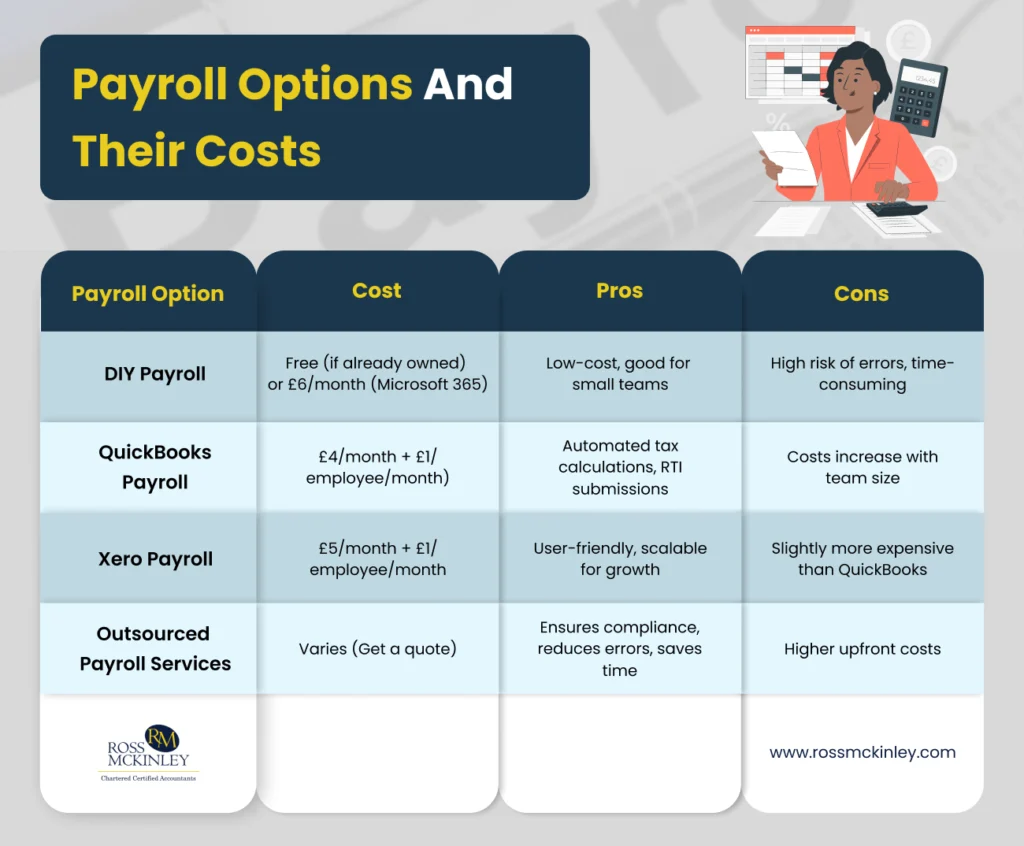
Table of Contents
How Much Does Payroll Cost in the UK?
Before we get into the nitty-gritty, let’s start with the basics. Payroll is the process of calculating and disbursing employees’ wages, but its significance goes beyond just paying salaries. In the UK, it plays a crucial role in the smooth functioning of an organisation and ensures compliance with legal obligations
To process payroll, start by calculating employees’ gross wages before deductions. Next, deduct income tax, National Insurance, pension contributions, and any student loan repayments. Once deductions are made, pay employees via direct deposit or cheque. You must also report payroll details to HMRC through Real Time Information (RTI) submissions.
Now the most awaited question is how much does payroll cost in the UK? Well, it depends on what options you consider. Here are some different payroll options and their costs.
DIY Payroll
If you’re looking forward to doing payroll yourself, you might come over Excel, Google Sheets, or Free payroll software on your way. Using Excel is free but only if you already own it or just pay £6/month for Microsoft 365. If you’re tech-savvy and have a small team, Excel can be a cost-effective way to manage payroll, but doing payroll yourself could be highly risky.
Using Paid Payroll Software
One of the most famous and used payroll software is QuickBooks, which starts at £4/month + £1/employee/month. QuickBooks is a popular choice for small businesses, offering automated tax calculations and RTI submissions. The low starting cost makes it accessible, but fees can add up as your team grows.
Another commonly used payroll software is Xero which starts at £5/month + £1/employee/month. Xero is known for its user-friendly interface and robust features, including employee self-service portals. While slightly more expensive than QuickBooks, it offers excellent scalability for growing businesses.
Using Professional payroll services
Using professional payroll services can be costly, but they prove to be beneficial in many ways, such as Expert Compliance, which ensures adherence to tax laws and regulations. Outsourcing helps in scalability as well.
Our team here at Ross McKinley is trained on the latest regulations and double-checks entries for accuracy, with regular updates that can save you time and stress. Wonder, what is the cost? Get a free quote now with just a click!
Factors that Influence Payroll Costs
Payroll costs depend on the factors that influence payroll costs. Here are the key factors that majorly influence payroll:
- Number of Employees
The more employees you have, the higher the cost.
- Payroll Frequency
Paying employees weekly, bi-weekly, or monthly can affect costs.
- Payroll Complexity
Do you have salaried employees, hourly workers, or freelancers? Each adds a layer of complexity.
- Software vs. Outsourcing
Using payroll software is usually cheaper than hiring a fully managed service.
- Additional Features
Things like auto-enrolment pensions, benefits administration, and HR integration can increase costs.
Additional Costs to Consider
When budgeting for payroll, don’t forget about these potential extra costs like workplace pension scheme, HR features, and other Fines and Penalties.
Pension Auto-Enrolment
If you have eligible employees, you’ll need to set up and manage a workplace pension scheme. This can add £2–£5/employee/month.
HR Integration
Adding HR features like holiday tracking and benefits administration can increase costs by £5–£10/month.
Training and Support
Some providers charge extra for training or premium support packages.
Penalties and Fines
If you make mistakes, you could face fines from HMRC. Investing in a reliable payroll solution can save you money in the long run.
DIY Payroll or Outsource?
When it comes to payroll, business owners have two main options: handling it themselves or outsourcing it to professionals. DIY payroll might seem cheap at first, but it comes with compliance risks and time-consuming calculations. Even a small mistake, like using the wrong tax code or missing an RTI submission, can lead to hefty penalties.
On the other hand, using professional payroll services can prove to be beneficial in many ways, such as Expert Compliance, which ensures adherence to tax laws and regulations. Outsourcing helps in scalability as well. Our team here at Ross McKinley is trained on the latest regulations and double-checks entries for accuracy, with regular updates that can save you time and stress.
Conclusion
So, how much does payroll cost in the UK? It depends on your business size, complexity, and the level of support you need. Whether you’re considering DIY options like Excel, mid-range payroll software like QuickBooks or Xero, or fully managed services like Ross McKinley, there’s a solution out there for every budget.
DIY payroll might save you money upfront, but it comes with hidden costs in terms of time, stress, and the risk of errors. Payroll software strikes a balance between affordability and functionality, offering automation and compliance support at a reasonable price. Fully managed services, while more expensive, provide peace of mind and expert handling of your payroll, freeing you up to focus on growing your business.
At the end of the day, payroll is an essential part of running a business, and investing in the right solution can save you time, money, and headaches.